Tankless vs tank water heater: which is better for Port Charlotte homes
Tankless wins on space and endless hot water; tanks win on upfront cost and simple repairs. Here's how Port Charlotte's water, climate, and home styles tip the scale.
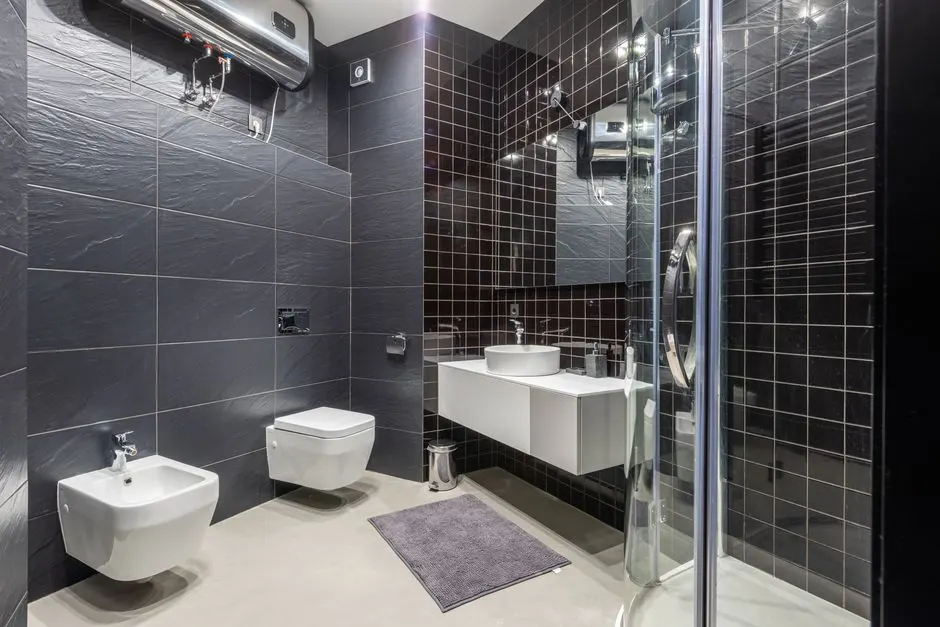
For most Port Charlotte homes, a tankless water heater is the better long-term choice if you plan to stay put for 10 years or more, while a tank water heater is the better buy if your budget is tight or your household rarely uses hot water at the same time. That is the honest answer. The rest of this post breaks down why, using real numbers from jobs we run across Charlotte County every week.
Tankless vs tank water heater Port Charlotte is a comparison that gets decided by three things: your water chemistry, your household size, and how long you plan to own the home. We will walk through each one, then give you 2026 pricing so you can run your own math.
Tankless vs tank water heater Port Charlotte: the short answer
Tankless vs tank water heater Port Charlotte is a comparison between an on-demand unit that heats water only when you open a tap and a storage tank that keeps 40 to 80 gallons hot around the clock. Tankless units mount on a wall, last 18 to 22 years, and never run out of hot water. Tanks sit on the floor, last 8 to 12 years, and cost roughly half as much to install.
Port Charlotte's water is the tiebreaker. Our municipal supply runs hard - typically 10 to 14 grains per gallon of hardness - and that calcium load is what kills tank water heaters early here. A tank that would last 12 years in a soft-water city often quits at year 8 in a Port Charlotte garage. Tankless units are not immune to scale, but a $200 descaling service every 12 to 18 months keeps them running.
If you want the full picture of what we install and service, our Water Heater Replacement Port Charlotte FL page covers the whole lineup.
How Port Charlotte's water and climate change the math
Port Charlotte sits in a subtropical zone where garages routinely hit 95°F in July and dip to the upper 30s on a January cold snap. That swing matters more than most homeowners expect.
Three local factors push the decision:
- Water hardness. Charlotte County water carries enough dissolved calcium that sediment settles in every tank. You will hear the popping and rumbling long before the tank fails.
- Incoming water temperature. Ground water here runs about 72°F to 78°F year-round. That is 20 to 30 degrees warmer than what a tankless unit sees in Ohio or Michigan, which means our units work less and recover faster.
- Garage placement. Most Port Charlotte homes - especially the 1980s and 1990s builds in sections like Deep Creek and Port Charlotte Village - put the water heater in the garage. A tank in a 95°F garage loses standby heat all day. A tankless unit does not care.
That warm incoming water is the single biggest reason tankless performs so well here. A Rinnai or Rheem unit rated for 8.5 gallons per minute at a 50-degree rise will push closer to 9.5 GPM in a Port Charlotte home because it only has to lift the water 40 degrees or so.
Tankless water heater pros and cons Port Charlotte
Tankless water heater pros and cons Port Charlotte homeowners should weigh start with the obvious win: endless hot water. Run the shower, the dishwasher, and the laundry at the same time and the temperature holds.
What we see on the plus side:
- 18 to 22 year service life with annual descaling
- Wall-mounted, freeing 6 to 9 square feet of garage floor
- Roughly 22 to 30 percent lower gas or electric use versus a tank
- No flood risk from a ruptured 50-gallon tank
- Better resale talking point in a market where buyers ask about efficiency
What we see on the minus side:
- Upfront cost runs $2,800 to $4,600 installed in 2026, roughly double a tank swap
- Retrofit jobs often need a 3/4-inch gas line upgrade or a new 240V circuit
- Hard water still scales the heat exchanger - skip the flush and you will pay for it
- Cold-water sandwich: brief lukewarm burst when you first turn on a tap after a long gap
If you already own a tankless unit and it is acting up, our team handles tankless water heater repair Port Charlotte FL on every major brand, including Rinnai and Rheem.
Tank water heater pros and cons Port Charlotte
Tank water heater pros and cons Port Charlotte residents care about usually come down to price and simplicity. A 50-gallon gas tank installed runs $1,200 to $1,900 in 2026. An electric 50-gallon runs $1,100 to $1,700.
The upsides are real:
- Lowest upfront cost of any option
- Any licensed plumber can service it - parts are on every supply house shelf
- No gas line or electrical upgrade needed on a like-for-like swap
- Works fine during a power outage if it is a gas unit with a standing pilot
The downsides hit harder in our climate:
- 8 to 12 year life, often shorter with hard water
- Standby loss in a hot garage wastes 15 to 20 percent of the energy you pay for
- 50 gallons is gone fast with three teenagers in the house
- A failed tank can dump 50 gallons onto your garage floor and into the living space
If your tank is already leaking or rumbling, do not wait. Our water heater leaking repair Port Charlotte FL crew can usually stop the damage the same day.
Tankless vs tank water heater cost Port Charlotte FL
Tankless vs tank water heater cost Port Charlotte FL breaks down like this for a typical 50-gallon replacement in 2026:
- Tank, gas, like-for-like: $1,200 to $1,900 installed
- Tank, electric, like-for-like: $1,100 to $1,700 installed
- Tankless, gas, standard swap: $2,800 to $3,900 installed
- Tankless, gas, with line upgrade: $3,600 to $4,600 installed
- Tankless, electric, with new circuit: $2,600 to $3,800 installed
Operating cost is where tankless claws back ground. A Port Charlotte family of four spends roughly $520 a year heating water with a gas tank and about $360 with a gas tankless - a $160 annual gap. Over 15 years that is $2,400, which covers most of the price difference. Add a $200 descaling every 18 months and you still come out ahead.
If you want a middle path, a hybrid heat pump unit lands between the two. Our hybrid heat pump water heater installation Port Charlotte FL service covers that option, and it makes sense in a garage that already stays warm.
Which water heater is better Port Charlotte for your situation?
Which water heater is better Port Charlotte depends on your household, not on a spec sheet. Here is how we sort it on the truck.
Go tankless if...
- You have three or more people showering back to back
- You plan to stay in the home 10+ years
- You want the garage floor space back
- You are already running a gas line or upgrading the panel
Stay with a tank if...
- You need the lowest upfront number
- You are selling within three years
- Your home has no gas service and the panel is full
- You only use hot water in short bursts
One more local note: homes in the older sections near water heater maintenance and flushing Port Charlotte FL territory - the 1970s and 1980s builds - often have undersized gas lines. We check that before quoting a tankless swap so there are no surprises on install day.
Common mistakes we see on Port Charlotte water heater jobs
The most expensive mistake is skipping the annual flush. Hard water here deposits scale fast, and a tankless heat exchanger that never gets descaled can fail at year 7 instead of year 20.
Other repeat offenders:
- Sizing a tankless by price instead of flow rate. A 6.5 GPM unit cannot run two showers and a dishwasher. We size by fixture count, not by what is on sale.
- Ignoring the expansion tank. Closed plumbing systems need one. Without it, the T&P valve drips and you blame the heater.
- Reusing the old flex connectors. They are $15 parts that cause $1,500 in water damage.
- Setting the thermostat above 130°F. It shortens anode rod life and raises scald risk. We set 120°F to 125°F.
- Burying the unit behind stored boxes. Both tank and tankless need airflow and access for service.
If your current unit is making popping or banging sounds, that is sediment. Our water heater making noise repair Port Charlotte FL service flushes the tank and checks the anode before the damage spreads.
When to call a professional
Call us when you see water on the floor, smell gas, get rusty hot water, or lose hot water entirely. Those are not DIY problems, and in a Port Charlotte garage they turn into mold and drywall repairs fast.
We handle gas and electric swaps, tankless retrofits, expansion tanks, and code corrections. Our technicians are state-licensed and we pull permits when the job requires one. If you are weighing a repair against a replacement, we will tell you straight which one makes financial sense - no upsell.
Port Charlotte AquaShield works across Charlotte County, from Harbour Heights to North Port. When your water heater is done, we get you hot water back the same day whenever the schedule allows.
Frequently Asked Questions
Is a tankless water heater better than a tank in Port Charlotte FL?
For most households staying 10+ years, yes. Tankless lasts 18 to 22 years versus 8 to 12 for a tank, and Port Charlotte's warm 75°F incoming water helps tankless perform at its best. If upfront budget is the deciding factor, a tank still wins on installed price.
Which water heater is best for Port Charlotte homes?
A gas tankless unit sized at 8 to 9 GPM fits most three-bedroom Port Charlotte homes. If you have no gas service and a full electrical panel, a 50-gallon electric tank or a hybrid heat pump unit is the practical pick. We size it to your fixtures, not a generic chart.
How much does a tankless water heater cost vs tank in Port Charlotte?
In 2026, a tankless install runs $2,800 to $4,600 depending on gas line or electrical work. A tank replacement runs $1,100 to $1,900. Tankless saves roughly $160 a year on gas, so the gap closes in about 12 to 15 years.
Does a tankless water heater work well in Port Charlotte Florida?
Yes - better than in most of the country. Ground water here enters at 72°F to 78°F, so the unit only has to raise temperature 40 to 50 degrees. That means higher flow rates and less wear. The one requirement is descaling every 12 to 18 months because of hard water.
How long does installation take?
A like-for-like tank swap takes 2 to 4 hours. A tankless retrofit takes 4 to 8 hours, longer if we run a new gas line or 240V circuit. We handle permits and inspection scheduling as part of the job.
Get help with Water Heater Replacement in Port Charlotte
Whether you go tankless or stay with a tank, the install has to be sized, vented, and permitted correctly the first time. We quote the job upfront, pull the permit, and test everything before we leave.
Call Port Charlotte AquaShield at (941) 307-1251 to schedule your water heater replacement in Port Charlotte.