Water heater not producing hot water: common causes and fixes
Cold showers in Port Charlotte usually trace back to a tripped breaker, a dead heating element, a pilot light, or sediment. Here are the causes and 2026 repair costs.
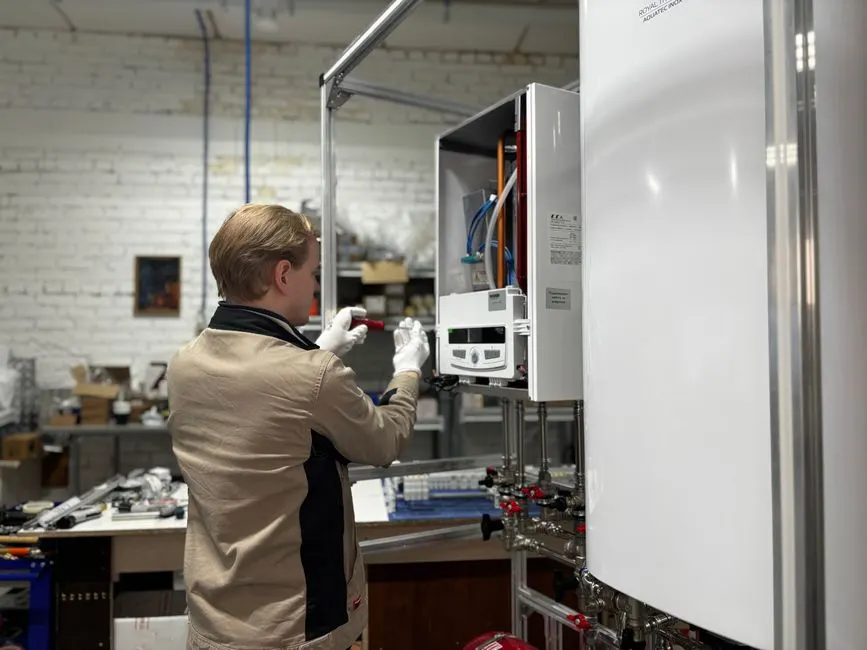
A water heater that stops producing hot water in Port Charlotte is almost always caused by one of six things: a tripped breaker or blown fuse, a failed heating element, a dead pilot light or igniter, a broken thermostat, heavy sediment buildup, or a tank that has finally rusted through. Most of these are repairable the same day, and the ones that are not usually mean the tank is past its service life. We are Port Charlotte AquaShield, and we handle water heater not producing hot water repair Port Charlotte FL calls every week in this town.
Below we walk through how to figure out which of those six you are dealing with, what a repair costs in 2026, and when it makes more sense to replace the unit than to keep patching it.
Why is my water heater not producing hot water in Port Charlotte FL?
Your water heater is not producing hot water in Port Charlotte because the heat source has stopped reaching the water - either the power or gas feeding the unit has been interrupted, or the part that transfers heat into the tank has failed. Water heater not producing hot water is a repair category that covers everything from a $12 breaker reset to a full tank swap, which is why the diagnosis matters more than the symptom.
Charlotte County water is hard. We pull from the Floridan aquifer, and that water carries dissolved calcium and magnesium that settles on the bottom of every tank in the county. That single fact explains a large share of the no-hot-water calls we run in Port Charlotte, Punta Gorda, and North Port.
A tank that has been heating the same water for eight years is not heating water anymore - it is heating a crust of mineral scale. The element sits inside that crust, overheats, and burns out. That is why so many "sudden" failures happen in year seven or eight rather than year two.
The most common causes, and how to tell them apart
Six failures account for nearly every no-hot-water call we take in Port Charlotte, and each one leaves a different fingerprint. Here is how to narrow yours down before anyone touches a wrench.
1. Tripped breaker or blown fuse (electric)
Check the panel first. A 30-amp double-pole breaker for the water heater that is sitting halfway between ON and OFF has tripped. Flip it fully to OFF, then back to ON. If it holds, you may have hot water in 30 to 45 minutes. If it trips again within minutes, stop - you have a shorted element or a wiring fault, and resetting it repeatedly will not fix anything.
2. Failed heating element
Most electric tanks have two elements, an upper and a lower. When the upper element dies, you get no hot water at all. When the lower one dies, you get a small amount of hot water and then it runs cold fast. A multimeter reading of the element terminals tells you in 60 seconds whether it is open. This is the single most common repair we perform on electric water heater repair and replacement Port Charlotte FL jobs.
3. Pilot light or igniter failure (gas)
On a gas tank, a cold pilot means no flame, which means no heat. Thermocouples and gas control valves fail with age, and so do the igniters on modern units. If you smell gas at any point, leave the house and call from outside - do not troubleshoot it yourself.
4. Broken thermostat
A thermostat that reads the tank as hotter than it is will never call for heat. If your tank is cold but the breaker is fine and both elements test good, the thermostat is the next suspect. We replace upper and lower thermostats as a pair because they fail at similar ages.
5. Sediment and mineral buildup
This is the Port Charlotte special. Scale insulates the element from the water, forces it to run hotter than designed, and shortens its life. You will usually hear popping or rumbling before the hot water quits. An annual water heater maintenance and flushing Port Charlotte FL visit is what prevents this from becoming a replacement.
6. A tank that has rusted through
If you see water pooling under the tank, or rust streaks running down the shell, the steel has given out. No repair fixes a compromised tank. That is a replacement, full stop.
How to fix a water heater not producing hot water in Port Charlotte
Fixing a water heater that is not producing hot water in Port Charlotte starts with matching the symptom to the cause, then repairing only the failed part. Here is the sequence we run on every call.
- Confirm the symptom. No hot water at all, or hot that runs out in two minutes? Those point to different elements.
- Check power or gas. Breaker, fuse, gas valve, pilot. This is free and takes five minutes.
- Test the elements and thermostats with a multimeter at the tank.
- Drain and inspect the tank bottom for scale depth and rust.
- Replace the failed part and refill before restoring power - dry-firing an element destroys it instantly.
- Run a hot-water test at the farthest fixture in the house, usually the kitchen sink, to confirm recovery.
Most of these repairs take 60 to 90 minutes on site. If the tank is sound, you have hot water back the same day. If it is not, we will tell you straight rather than sell you a part that buys six more months.
Water heater not producing hot water after a power outage in Port Charlotte
A water heater not producing hot water after a power outage in Port Charlotte is usually a tripped breaker, not a dead appliance. Summer storms roll through here from June through October and knock out power across whole neighborhoods, and the surge when it comes back on is what trips the water heater circuit.
Reset the breaker once. If it holds, give the tank 45 minutes and check again. If it trips a second time, the surge took out an element or the control board, and you need a technician. We run emergency water heater repair Port Charlotte FL through storm season for exactly this reason.
One more thing worth knowing: if your home lost power for more than a day and the tank sat full of lukewarm water in a hot garage, bacteria can bloom and give the hot water a sulfur smell. That is a flush-and-sanitize job, not a replacement.
Common mistakes we see on DIY water heater repairs
The mistakes we see most often on DIY water heater repairs in Port Charlotte are the ones that turn a $200 fix into a $1,400 replacement. Watch for these.
- Restoring power before the tank is full. A dry element burns out in seconds. Fill the tank and bleed the air at a hot tap first.
- Replacing only one element. If the upper is gone, the lower is usually close behind. Do both.
- Skipping the anode rod. The anode sacrifices itself so the tank does not rust. Once it is gone, the tank is next. A water heater anode rod replacement Port Charlotte FL is cheap insurance.
- Turning the thermostat past 140°F. It does not make more hot water, it just raises scald risk and scale buildup.
- Ignoring a T&P valve that drips. That valve is a safety device. If it is weeping, the tank is over-pressurizing.
When to call a professional
Call a professional when the breaker trips twice, when you see water under the tank, when you smell gas, or when the tank is over ten years old and the repair bill is climbing past a third of replacement cost. Those four situations cover the calls where DIY time and money get wasted.
We handle gas and electric tanks, tankless units, and hybrid heat pump systems across Port Charlotte. If you are weighing repair against replacement, we will give you a straight number on both before any work starts.
How much does no hot water repair cost in Port Charlotte?
No hot water repair in Port Charlotte runs $150 to $450 for most single-part fixes in 2026, with heating elements and thermostats at the low end and gas control valves at the high end. A full replacement of a standard 50-gallon tank installed runs $1,200 to $2,200 depending on whether you go tank or tankless water heater installation Port Charlotte FL.
For reference, a heating element replacement is typically $180 to $280, a thermostat pair is $200 to $320, and a thermocouple or igniter on a gas unit is $150 to $250. If the diagnosis is a rusted tank, no repair price applies - that money goes toward replacement.
We quote the repair before we start, and if the honest answer is that replacement is the better spend, we say so.
Frequently Asked Questions
Why is my water heater not producing hot water in Port Charlotte FL?
In Port Charlotte, the top three causes are a tripped 30-amp breaker, a burned-out heating element, and heavy sediment from our hard aquifer water. Gas units add pilot light and thermocouple failures to that list. A technician can identify which one in under 15 minutes with a multimeter.
How do I fix my water heater not producing hot water in Port Charlotte?
Reset the breaker once and wait 45 minutes. If that fails, check whether you get a little hot water or none - that tells you which element failed. Beyond that, testing elements and thermostats requires a multimeter and panel access, so most homeowners call us at that point.
Can a water heater not producing hot water be repaired in Port Charlotte?
Yes, in most cases. Elements, thermostats, thermocouples, igniters, and anode rods are all replaceable, and repairs typically run $150 to $450. The exception is a tank that has rusted through or is leaking from the shell - that one gets replaced, not repaired.
How much does no hot water repair cost in Port Charlotte?
Expect $150 to $450 for a typical single-part repair in 2026. Element swaps sit around $180 to $280, thermostat pairs $200 to $320, and gas-side ignition parts $150 to $250. Full replacement, if needed, is $1,200 to $2,200 installed.
How long should a water heater last in Florida?
Eight to twelve years for a standard tank in this climate, and closer to eight if it has never been flushed. Hard Charlotte County water and a hot garage shorten that. Tankless units run 18 to 20 years with annual descaling. Once a tank passes year ten, start budgeting for replacement.
Get help with Water Heater Replacement in Port Charlotte
If your tank is rusted, leaking, or past year ten and the repair bill is climbing, replacement is the smarter spend - and we install standard, tankless, and hybrid units across Port Charlotte. One call and we will diagnose it, quote it, and get your hot water back.
Call Port Charlotte AquaShield at (941) 307-1251 to schedule service.