How Port Charlotte humidity and hard water affect your water heater
Port Charlotte's humid air and mineral-heavy water quietly shorten water heater lifespan. Here's what's happening inside your tank and how to stop it.
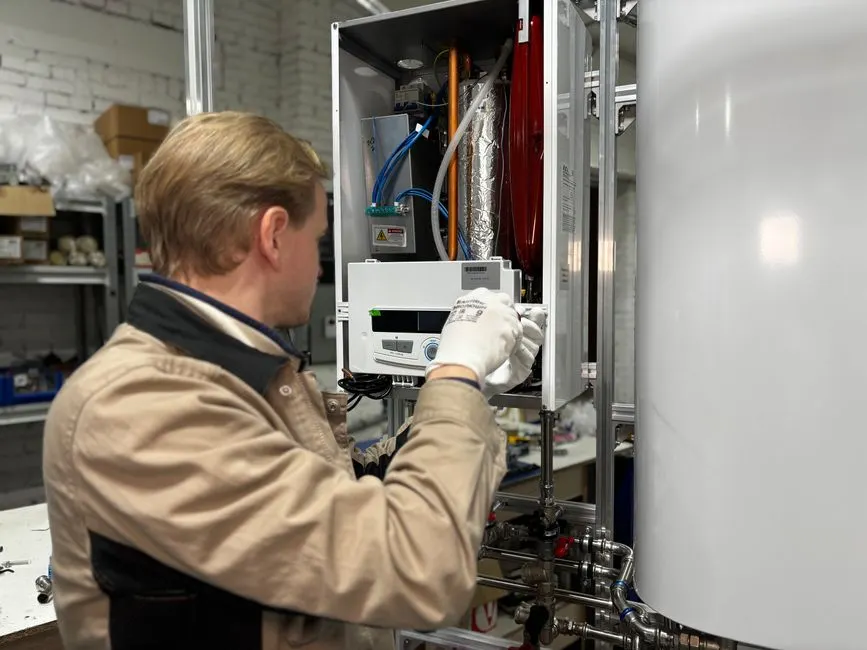
Port Charlotte's humidity and hard water work together to shorten a water heater's life - the mineral-rich water coats the tank interior with scale while the coastal air rusts the fittings and electrical connections from the outside in. A tank that would last 12 years in a dry, soft-water climate often gives out here in 7 to 9. That gap is not bad luck; it is chemistry, and it is largely preventable with the right maintenance schedule.
Below we break down exactly what is happening inside your tank, how to spot the damage early, and how often you should be flushing in this part of Southwest Florida. We do this work every week across Charlotte County, so the numbers and symptoms here are the ones we actually see.
What Port Charlotte's water and air actually do to a tank
Port Charlotte sits on groundwater pulled from the Floridan aquifer, and that water comes out of the tap at roughly 180 to 250 mg/L of calcium carbonate - solidly in the hard-to-very-hard range on the standard scale. Every gallon that enters your tank carries dissolved calcium and magnesium with it.
Meanwhile, our average relative humidity runs between 70% and 80% for most of the year, and garages, utility closets, and lanais where water heaters live rarely see air conditioning. That combination is why Water Heater Replacement Port Charlotte FL calls are so often corrosion calls rather than mechanical failures.
Two separate processes are running at once:
- Inside the tank: heat forces dissolved minerals out of solution, where they settle as scale on the bottom and coat the heating elements.
- Outside the tank: humid air condenses on cold metal fittings, the anode rod port, and the electrical junction box, feeding surface rust that eventually reaches the tank shell.
Neither one announces itself loudly. Both show up as higher power bills, lukewarm water, and a tank that quits two or three years earlier than the label promised.
Hard water sediment buildup: the slow killer inside your tank
Hard water sediment buildup in a Port Charlotte water heater is the single most common problem we find on service calls, and it is almost always worse than the homeowner expects. Here is the sequence.
Minerals precipitate out of the heated water and fall to the tank floor. That layer of scale insulates the water from the burner or element above it. The thermostat senses the water is not hot enough, so it runs longer. Longer run times mean more heat, more mineral precipitation, and a thicker scale layer. It is a feedback loop.
By the time you hear the rumbling - that popping, crackling sound like gravel in a dryer - the sediment layer is usually an inch or more thick. At that point the tank is working harder than it should, and the steel underneath is being cooked.
On the electric side, scale builds directly on the heating element sheath. Elements that should last a decade fail in three or four years. We replace a lot of them, and we handle that under water heater heating element replacement Port Charlotte FL when the tank itself still has life left in it.
Signs sediment is already a problem
- Rumbling, popping, or banging from the tank during heat-up
- Hot water runs out faster than it used to
- Electric bill creeping up with no change in usage
- Discolored or cloudy hot water, especially first thing in the morning
How does hard water affect my water heater in Port Charlotte FL?
Hard water affects your water heater in Port Charlotte FL by depositing calcium and magnesium scale on the tank floor and heating elements, which forces the unit to run longer, overheats the steel, and can cut lifespan by 3 to 5 years. The damage is cumulative - it does not reverse on its own.
Three specific failure modes come out of that:
- Overheated tank bottom. Scale traps heat against the steel floor. The metal fatigues, cracks, and starts weeping from the bottom - the classic end-of-life failure.
- Dead heating elements. Scale-encrusted elements burn out or trip the reset button repeatedly.
- Anode rod consumption. The sacrificial anode dissolves faster in hard water because it is working harder to protect the tank lining. Once it is gone, the tank itself becomes the anode.
That third one is why we push water heater anode rod replacement Port Charlotte FL so hard on tanks that are four or more years old. A $150 to $250 anode swap in 2026 is a lot cheaper than a $1,400 to $2,600 tank replacement.
Does Port Charlotte humidity damage water heaters?
Yes - Port Charlotte humidity damages water heaters by keeping exterior metal surfaces wet long enough to rust, and by degrading the electrical connections and insulation on outdoor or garage-mounted units. It is a slower process than hard water damage, but it is relentless.
Most Port Charlotte homes have the water heater in the garage, a utility closet, or an exterior alcove. None of those spaces are climate-controlled. During the wet season, from roughly June through September, those spaces hold moisture against metal for weeks at a time.
What we find on inspection:
- Rust rings around the anode rod port and the inlet/outlet nipples
- Corroded thermostat covers and element access panels on electric units
- Rusted flue hoods and draft diverters on gas units, which can affect venting
- Pilot assemblies on gas heaters that struggle to stay lit in damp air
If your gas unit keeps losing its flame, that is often a humidity-and-corrosion issue rather than a gas supply problem, and it falls under water heater pilot light keeps going out repair Port Charlotte FL.
Water heater corrosion in Port Charlotte: what to look for
Water heater corrosion in Port Charlotte almost always starts at the fittings, not the tank body, which is good news - fitting corrosion is fixable. Tank shell corrosion is not.
Do a five-minute check twice a year. Look at:
- The top of the tank where the pipes connect - any rust streaks or white mineral crust
- The bottom rim of the tank - rust here means the shell is compromised
- The T&P valve and discharge pipe - mineral deposits or dripping
- The electrical junction box on electric units - rust or moisture inside
Rust at the top fittings usually means a leaking nipple or a failing dielectric union, and we can fix that. Rust at the bottom rim of the tank means the tank is done. No repair saves a rusted-through shell.
One thing worth adding on newer builds: many Port Charlotte homes now have a closed plumbing system with a backflow preventer, which means thermal expansion has nowhere to go. That is what water heater expansion tank installation Port Charlotte FL solves, and skipping it accelerates stress on the tank and the T&P valve.
How often should you flush a water heater here?
In Port Charlotte, you should flush a tank-style water heater every 6 to 12 months - annually at minimum, and every 6 months if your home has no water softener. The national advice of "every year or so" assumes softer water than what comes out of our taps.
Here is the schedule we recommend to customers:
- Softened water: flush once a year, inspect the anode rod at year 4.
- Unsoftened municipal or well water: flush every 6 to 9 months.
- Well water with visible hardness or iron: flush every 6 months and check the anode rod annually.
- Tankless units: descale every 12 months in Port Charlotte, or every 8 months on well water.
If you would rather not crawl around with a hose and a bucket, our water heater maintenance and flushing Port Charlotte FL service covers the flush, the anode check, the T&P test, and a full exterior corrosion inspection in one visit.
Common mistakes Port Charlotte homeowners make
The mistakes we see most often in Port Charlotte are not exotic - they are the predictable results of treating a coastal, hard-water climate like a dry inland one.
- Flushing once every three or four years. By then the scale has hardened into a crust that a standard flush will not remove. You need a full descale at that point.
- Setting the thermostat to 140°F to "get more hot water." Higher temperatures accelerate scale formation and burn through anode rods faster. 120°F is the right setting for most homes here.
- Ignoring the anode rod. It is the cheapest part on the unit and the one that decides whether your tank lasts 8 years or 13.
- Leaving the water heater in an unconditioned garage with no ventilation. A little airflow around the unit makes a measurable difference in how fast the fittings rust.
- Replacing a leaking tank with the same size and type. If you have hard water and a growing family, a heat pump or tankless unit may fit the house better than another 50-gallon tank.
One more: homeowners often wait until the tank is actively leaking to call. By then you are paying for emergency work and water cleanup, not just a swap. If your tank is past year 8 and you are seeing rust or hearing rumbling, get it looked at before it fails on a Saturday night.
When to call a professional
Call us when you see rust at the bottom rim of the tank, when hot water runs out in under five minutes, when the unit is making rumbling or popping sounds, or when you find standing water anywhere around the base. Those are the four signals that separate a maintenance visit from a replacement.
Our team at Port Charlotte AquaShield handles the diagnosis, the flush or descale, the anode and element work, and full replacements. We give you a flat price before we start, and we haul the old unit away when we are done.
If your tank is 8 years or older and you have never had it flushed, that is the call to make this month, not next spring.
Frequently Asked Questions
How does hard water affect my water heater in Port Charlotte FL?
It deposits calcium and magnesium scale on the tank floor and heating elements, forcing the unit to run longer and hotter. That overheats the steel, burns out elements, and shortens lifespan by 3 to 5 years compared to soft-water operation.
Does Port Charlotte humidity damage water heaters?
Yes. Humid air keeps exterior metal wet, rusting fittings, thermostat covers, and flue hoods. Units in garages and utility closets are most exposed, and corrosion there is often what ends a tank's life before the interior fails.
How often should I flush my water heater in Port Charlotte Florida?
Every 6 to 12 months. If you have no water softener, flush every 6 to 9 months. On well water, every 6 months. Tankless units need descaling once a year here, or every 8 months on well water.
Can hard water shorten my water heater lifespan in Port Charlotte?
Yes - by 3 to 5 years on average. A tank rated for 12 years often fails at 7 to 9 in our water. Annual flushing and anode rod replacement at year 4 are the two things that recover most of that lost time.
What does water heater sediment buildup sound like?
Rumbling, popping, or crackling during heat-up, like gravel rolling in a dryer. That sound means the scale layer is thick enough to trap heat against the tank bottom. Flush it or descale it before the steel cracks.
Get help with Water Heater Replacement in Port Charlotte
If your tank is rusting, rumbling, or past year 8, we can tell you in one visit whether it needs a flush or a full replacement - and give you a flat price either way.
Call Port Charlotte AquaShield at (941) 307-1251 and we will get your hot water back to where it should be.